| ENRIQUE VILA-MATAS |
|
|
| AN ENGLISH PAGE |
|
VILA_MATAS
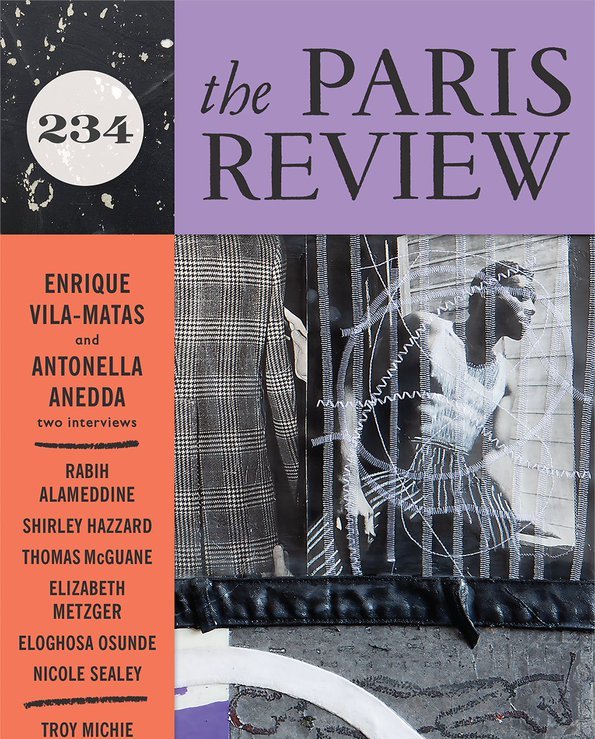
interviewed by Adam Thirlwell
in THE PARIS REVIEW
FALL 2020
|
|
|
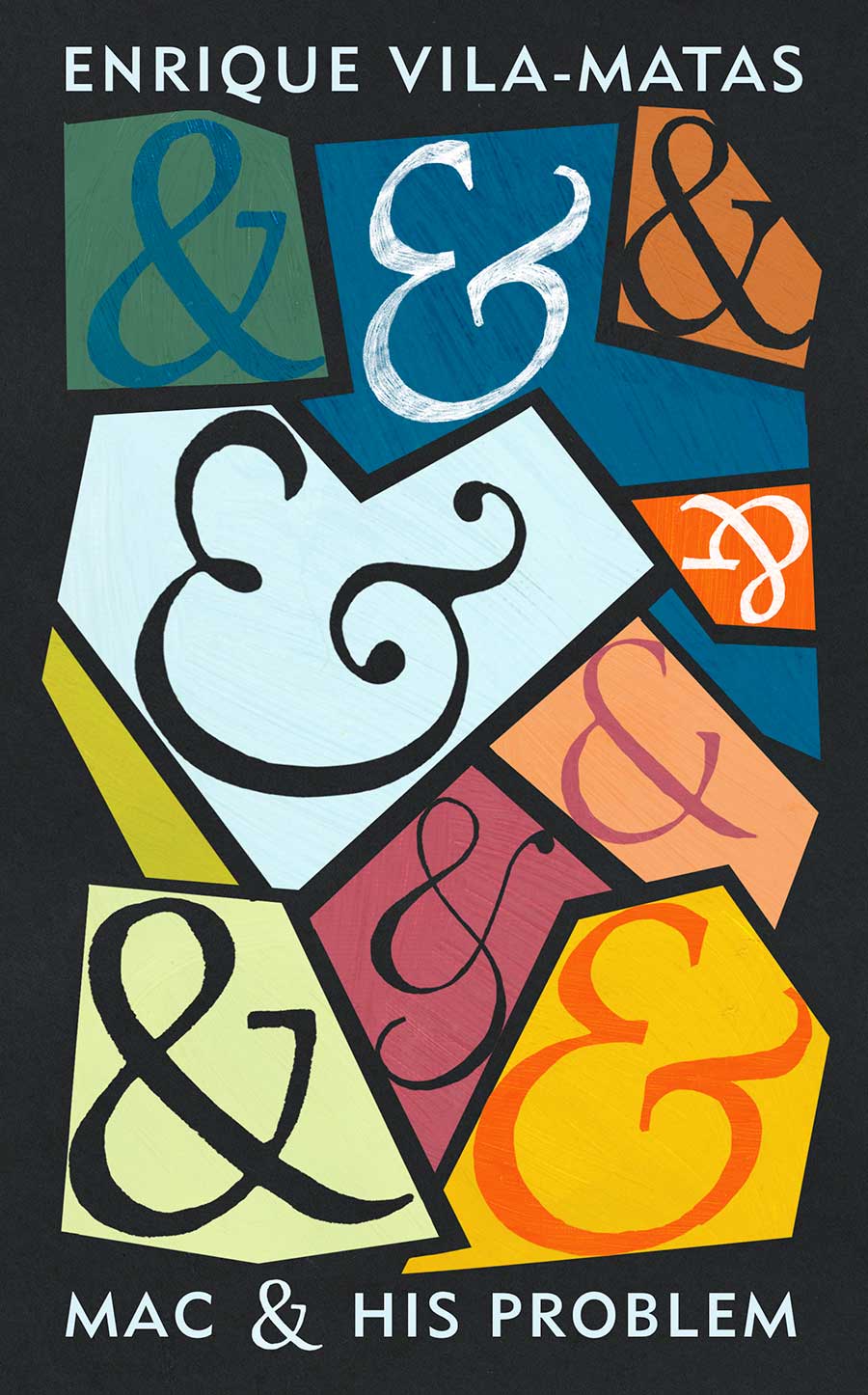
We are delighted that The Memory Police by Yoko Ogawa, translated by Stephen Snyder, and Mac & His Problem by Enrique Vila-Matas, translated by Margaret Jull Costa and Sophie Hughes, have been longlisted for the #InternationalBooker2020. |
|
|
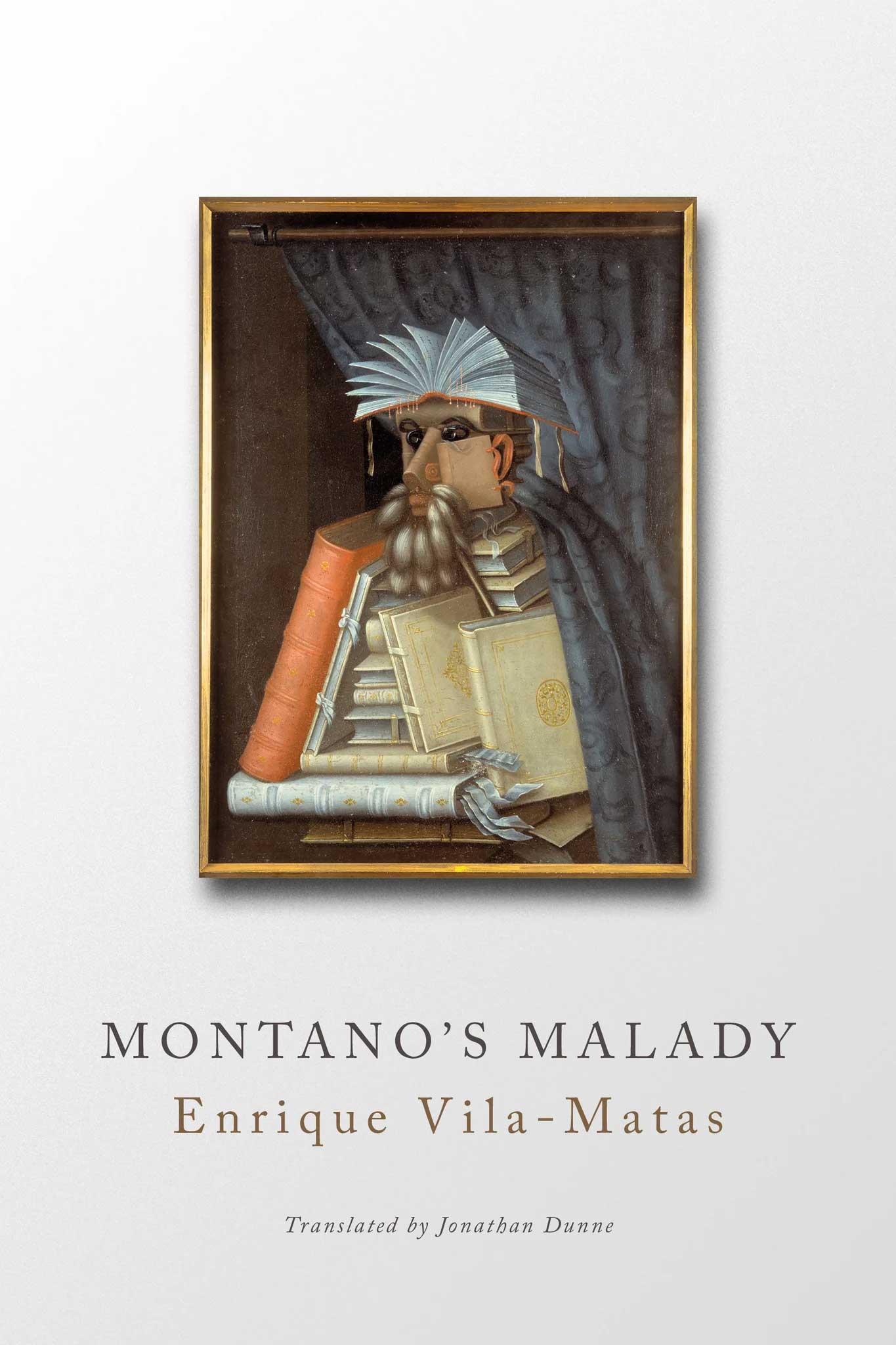
January 24, in the Dalkey Archive,
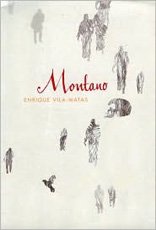
'Montano's Malady' reappears in the USA
(translated by Jonathan Dunne).
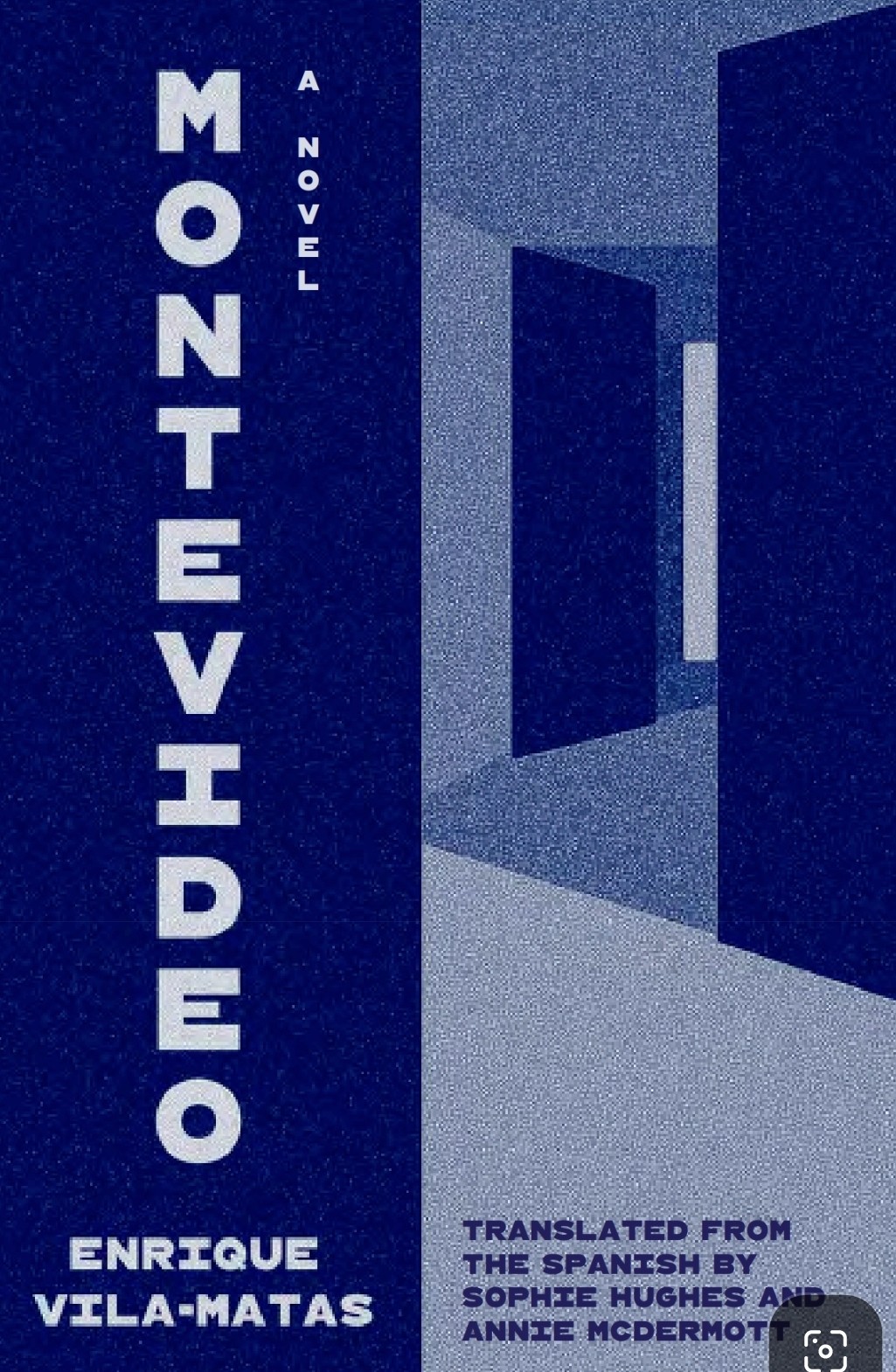
And two months later, the English translation of 'Montevideo'.
|
|
|
An Injection of Humility, by Vila-Matas.
Los Angeles Review of Books.
MAY 19, 2020 |
|
|
|
 |
- Orthofer, Michael. Another very enjoyable ride. The Complete Review. April 21, 2019.
- Varno, David. Mac´s Problem. On the Seawall. April 30, 2019.
- Banks, Eric. Mac´s Problem. Bookforum. May 20, 2019.
- Mabbot, Alastair. And his problem. The Herald (Scotland). June 8, 2019.
- Trela, Baily. The Runaway Combinatorics of Mac’s Problem. 3:AM Magazine. June 12, 2019.
- Anokatony. A Literary Sage/Fool. Anokatony.wordpress.com. June 22, 2019.
- Fonseca, Carlos. In Mac and his Problem. The White Review. N. 25, June 2019.
- Anonym. Witty, clever, literary novel. The Modern Novel. June 2019.
- Mc Dermott, Annie. Repeat Perfomance. The Times Literary Supplement. 9/07/2019.
- Anthony. Holiday Reading / Piglia and Vila-Matas. Time's Flow Stemmed. July 26, 2019.
- Van Der Vliet Oloomi, Azareen. The Catalan Paradox: An Interview. Los Angeles Review of Books. 8/09/2019.
- W. Jonathan. A unique kind of joy. Politics and Prose. 12/10/2019.
- Maine, Derek. Mac´s Problem and Co. Book Review YouTube. 15/10/2019.
- Terry. Vila-Matas´s Old Married Couple. Vertigo (web about Sebald). February 17, 2021.
|
|
|
|
| HIGHLIGHTS |
|
|
|
|
The Literature of No
An Interview with Enrique Vila-Matas
by Veronica Scott Esposito
TinHouse, New York, december 2018 |
|
 |
|
 |
|
Enrique Vila-Matas on Books that Shaped Him
(in Five Books)
Translated by Sophie Hughes
Interview by Thea Lenarduzzi
January 12, 2018
|
|
Praise for Enrique Vila-Matas
‘Vila-Matas’s work made a tremendous impression on me. I was fascinated by his humour, the incredible knowledge he has of all kinds of literature, his compassion for writers, and his fearlessness in taking on literary subjects and making that part of what he is writing about.’ Paul Auster
‘A writer who has no equal in the contemporary landscape of the Spanish novel.’ Roberto Bolaño ‘Arguably Spain’s most significant contemporary literary figure.’ Joanna Kavenna, New Yorker
‘Highly original, both lucid and ludic.’ The Guardian
‘Vila-Matas has found his own solution to the supposed exhaustion of possibilities in literature: a devotion to digression and lightness.’
Lidija Haas, The Telegraph
‘He absorbs the reader into a singular territory in which life and literature are a shared enterprise.’ Valerie Miles, New York Times
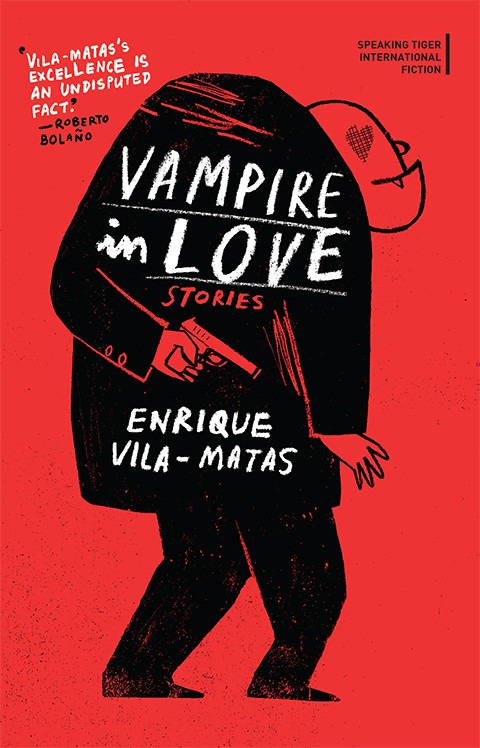
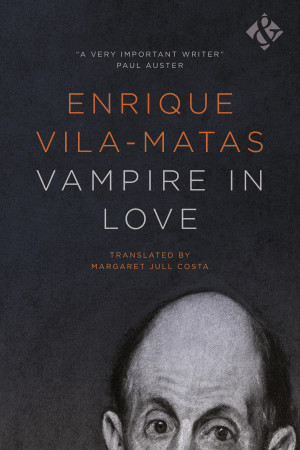
‘Playful, highly accessible, and beautifully translated, the stories in Vampire in Love showcase a master writer who is happy to indulge the imagination and explore the possibilities of existence.’
Mark Brazos, The Rumpus
“Enrique Vila-Matas has pioneered one of contemporary literature's
most interesting responses to the great Modernist writers.”
— The Paris Review
|
|
 |
|

|
|
“A Catalan writer who is arguably Spain´s most significant contemporary literary figure.” Joanna Skavenna, The New Yorker
“Enrique Vila-Matas, one of Spain’s most distinguished novelists.” Rachel Nolan, The New York Times
“There is a kind of literary fiction that feeds on itself, like an introverted cannibal (…) The French excel at this but worthy followers include such masters as Borges, Sebald and the Spanish writer Vila-Matas. In this self-reflective area of fiction, Vila-Matas has a province of his own.”
Alberto Manguel, The Guardian
“This is a brilliant, funny novel; an expertly woven tapestry of literary allusions (…) a wondrously keleidoscopic novel (…) Vila-matas has created a masterpiece.” Jacqueline McCarrick, The Times Literary Supplement
«Vila-Matas has pioneered one of contemporary literature’s most interesting responses to the great Modernist writers.» Scott Esposito, The Paris Review
«An exquisite and original book in which literature does not make us think about life: it is life» Minh Tran Huy, Le Magazine Littéraire
“Enrique Vila-Matas is one of the most important writers in the world.” Andrea Bajani, La Repubblica |
|
The Future: Enrique Vila-Matas in Guadalajara
28 Apr 2016
MUSIC & LITERATURE
Mexico, November 28, 2015
Translated by Thomas Bunstead
I have come to talk to you about the future. The future of the novel, I suppose, though possibly just the future of this speech. I’m going to describe to you the future as for years I imagined it would be. Put yourselves in 1948, the year I was born, on the August afternoon when music stations in Maryland began to play the sounds of a strange, all but noiseless disc, soon spreading all along the East Coast, leaving a trail of perplexity in anyone who happened to hear them. What was it? Nothing of the kind had ever been heard before, so it still didn’t have a name, but it was—we now know—the first Rock n’ Roll song in history. (+) |
|
 |
|
 |
|
Welcome to Literature's Duchamp Moment
The New Republic. May 18, 2015.
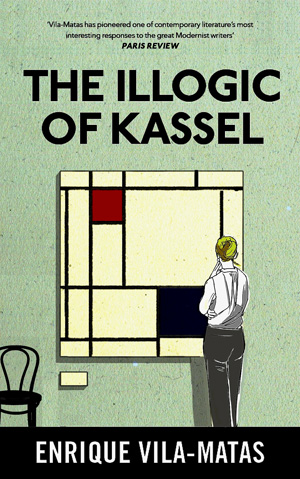
The novel lightly fictionalizes Vila-Matas' real-life experience at the Documenta art exhibition in Kassel, Germany, where he was invited to participate in a week-long writer-in-residence program in 2013. |
|
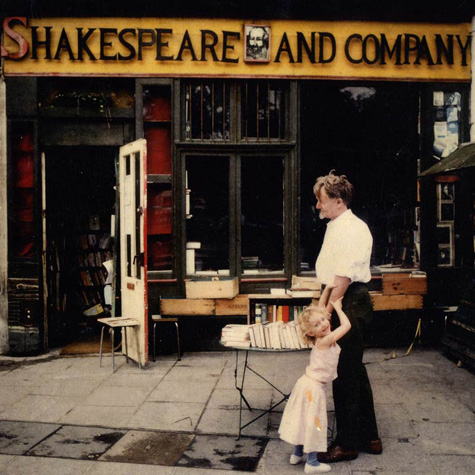
SHAKESPEARE AND COMPANY:
Nathan Loceff picks (22.12.2015)
Because She Never Asked, newly translated and put out in a beautiful little edition by New Directions, is a wonderful read. It is entertaining, funny and thought provoking. At only 89 pages it can be read in a day and probably will be because despite being quite philosophical, it reads like a thriller. You want to understand and so you keep reading and soon you are done.
|
|
 |
|
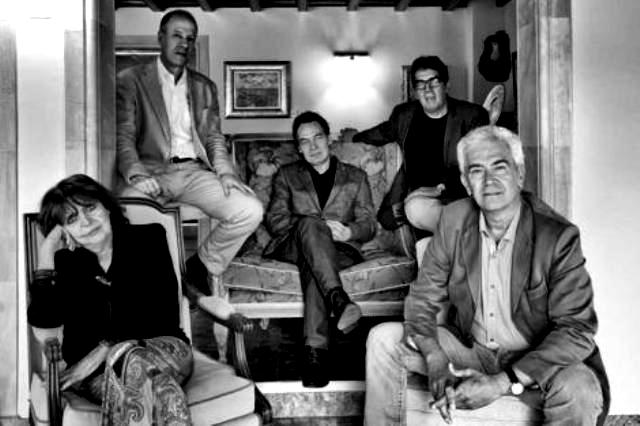
Jury Formentor 2014: Cristina Fernández Cubas, Aurelio Major, Eduardo Lago, Ignacio Vidal Folch and Basilio Baltasar. |
|
ENRIQUE VILA-MATAS WINS PREMIO FORMENTOR DE LAS LETRAS
The prize, worth 50,000 euros will be awarded on August 30 at the Hotel Formentor in the north of the Spanish island of Mallorca in the Mediterranean. The jury, chaired by Basil Baltasar and formed by Cristina Fernández Cubas, Eduardo Lago, Aurelio Major and Ignacio Vidal-Folch, unanimously recognized the merits of the writer's work to grant the award.
First cycle
1961 Jorge Luis Borges and Samuel Beckett. 1962 Uwe Johnson. 1963 Carlo Emilio Gadda.
1964 Nathalie Sarraute. 1965 Saul Bellow. 1967 Witold Gombrowicz.
Second cycle
2011 Carlos Fuentes. 2012 Juan Goytisolo. 2013 Javier Marías. 2014 Enrique Vila-Matas.
|
|
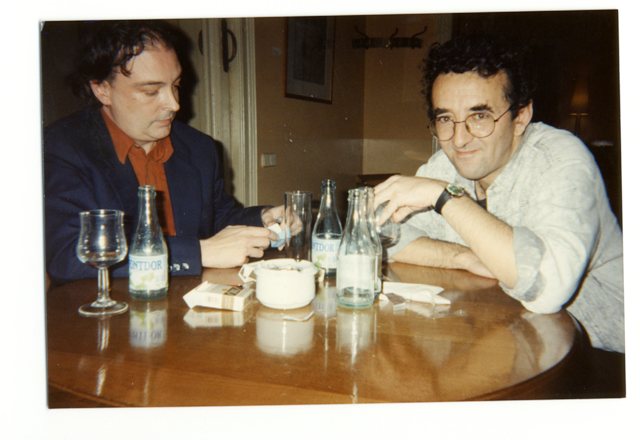
-To finish up, given that your books frequently deal with other writers, I’d like to ask you about your friendship with Roberto Bolaño, who, as you know, has become a very popular writer in the United States. Did the friendship leave traces in your literature?
-Meeting Bolaño in 1996 meant that I no longer felt alone as a writer. In that Spain, which was trapped in a provincialism and an antiquated realism, finding myself with someone who from the very first moment felt like a literary brother helped me to feel free and not consider myself as strange as some of my colleagues would have me believe. Or maybe it was the opposite: I was stranger still. We laughed together very much. We wrote letters to imbeciles and we talked of a beauty that was short-lived and whose end would be disastrous.
The Paris Review, translated from Spanish by Scott Esposito. |
|
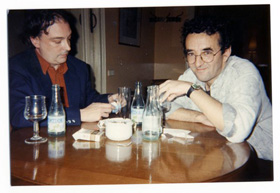
Vila-Matas and Roberto Bolaño in Blanes 1998 |
|
 |
|
THINGS FALL APART
(Joanna Kavenna in THE NEW YORKER)
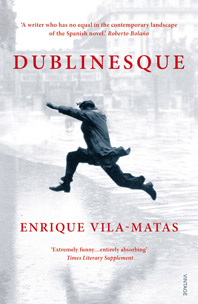
At the start of "Dublinesque", the latest novel by Enrique Vila-Matas (translated from the Spanish by Anne McLean and Rosalind Harvey; New Directions), Riba, an aging Publisher who has recently battled alcoholism and closed down his publishing house, is invited to a literary festival in Lyon to speak on "the grave state of literary publishing in Europe (sigue leyendo)
|
|
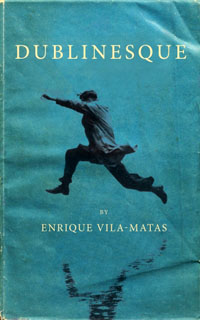
Dublinesque by Enrique Vila-Matas:
a delicious Joycean picaresque
[Eileen Battersby, 5 July 2015. Irish Times]
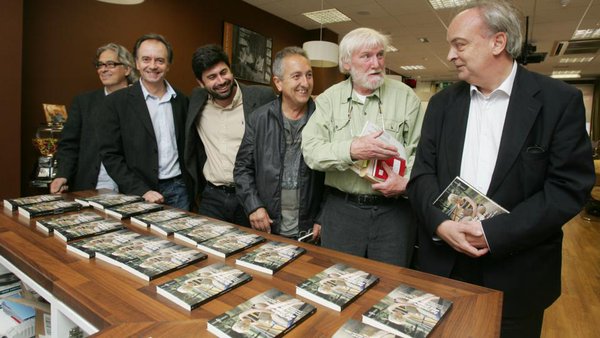
Founder of the Order of Finnegans, dedicated to the celebration of James Joyce, the Spanish author’s familiarity with Irish literature
makes Dublinesque a pleasure to read |
|
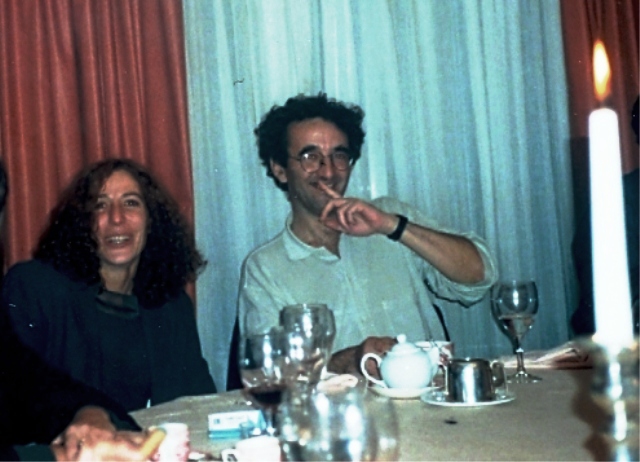
ROBERTO BOLAÑO by Vila-Matas
(The White Review)
|
|
 |
|
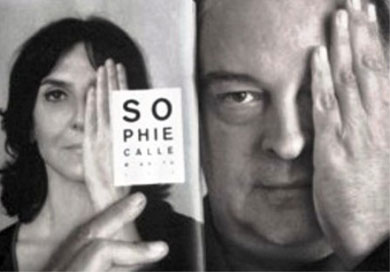
BECAUSE SHE NEVER ASKED.
By Enrique Vila-Matas (Author), Valerie Miles (Translator), New Directions ed. Nov. 2015
“Nobody imitated Sophie Calle better than Rita Malú. Rita liked to be considered an artist, though she wasn’t at all sure of being one. She had carried out a variety of experiments with truth, which someone baptized with the name wall novels, that were nothing more than modest tributes to her beloved Sophie Calle, “narrative artist” par excellence, artist with whom she shared a difference in age of but a single year.” |
|
INTERVIEW OF LINA MERUANE IN BOMB
Lina Meruane Do you have the reader in mind when you write?
Enrique Vila-Matas Never. I think of myself as the reader. It isn’t selfish, though; it’s about needing to like what I’m doing.
LM The idea of the journey is at the core of your books: a writer travels and narrates his displacement...
|
|
 |
|
 |
|
IRONIE, STYLE, HAPPINESS, Aaron Hillyer
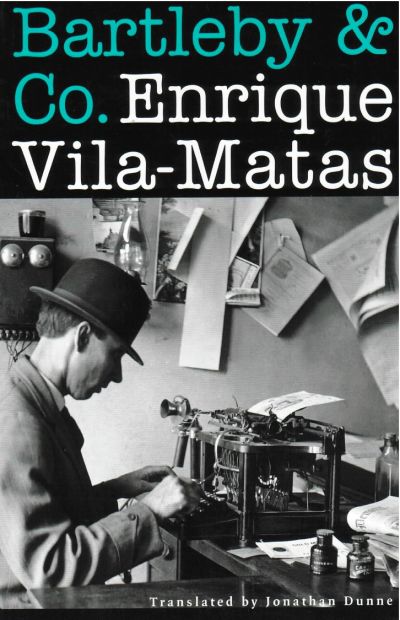
Near the beginning of Enrique Vila-Matas's novel Bartleby and Co. its hunchback narrator responds to a colleague who asks what the literature of the future will be like: “I don't know. If I knew I would write it myself”! We soon learn that the narrator himself has not-so-coyly taken the gambit: I wonder if I can do this. I am convinced that only by tracking down the labyrinth of the No can the paths still open to the writing of the future appear (sigue leyendo) |
|
AUSTRALIA INTERVIEW WITH VILA-MATAS (Meanjin magazine)
JWW: Why should I believe what you’re telling me now, given that your novels are bulging with false quotations and red herrings?
EV-M: You are quite right to be wary, but you’d be far better off believing me. Why don’t you try, even if only to politely return the courtesy I’ve bestowed on you by considering your question to have been asked in all seriousness in the first place?
JWW: It would thus follow that truth—which apparently goes hand in hand with seriousness—boils down to a question of courtesy. Be that as it may, I do find a great deal of humour in your novels, precisely in their most sullen passages. (sigue leyendo) |
|
 |
|
 |
|
Litanies of an Audacious Rosary, by Vila-Matas in THE WHITE REVIEW.
(Wonderful observations about Malamud, Kafka, Sebald, and others–and a scene set in the offices of New Directions. Fragments of DIETARIO VOLUBLE) Rosalind Harvey / translation)
From among the multiple adventures, readers of the visionary Borges will never forget the spiral staircase, which plunges down and soars up off into the remote distance in his memorable tale ‘The Library of Babel’. When this story was first published in 1941, few could have imagined that this staircase would end up turning Borges into a demiurge, a strange visionary who described the Internet before it existed. |
|
|
| BIBLIOGRAPHIES |
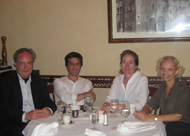
V-M with New Directions editors
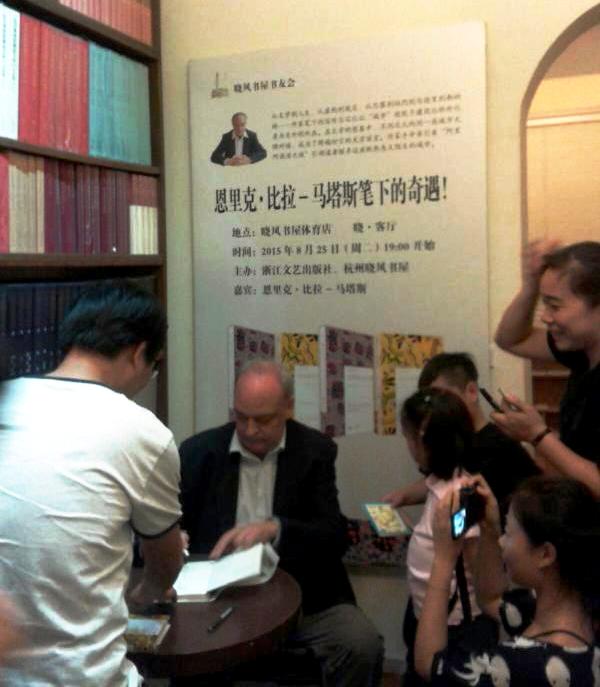
In library of Hangzhou, 2015 |
- Welcome to Literature's Duchamp Moment. Shaj Mathew. The New Republic. May 18, 2015.
- The Illogic and Brief History. Pasha Malla. The Globe and Mail. June 5, 2015.
- The Illogic of Kassel. M.A.Orthofer. Complete Review. June 8, 2015.
- A chamber of echoes. Tristan Foster. Words without Borders. June 17, 2015.
- The illogic of Kassel. Tmn. The Modern Novel. July 23, 2015.
- One of the standouts of 2015 to date. Tony Messenger. Messengers Booker. July 27, 2015.
- Art for Whose Sake? Jonathan Lee. Literary Review. August 2015. Issue 434.
- Vila-Matas Plots His Own Awakening in The Illogic of Kassel. Valerie Miles. The New York Times. August 13, 2015.
- Light-hearted. Lidija Haas. The Telegraph. August 21, 2015.
- The Illogic of Kassel review – thrillingly imaginative. Alex Clark. The Guardian. Sunday, August 23, 2015.
- Fall 2015's best Latin American novels. Julie Schwietert Collazo. The Guardian. September 1, 2015.
- The Triumphant Humiliation of Enrique Vila-Matas. Vértigo (Sebald.Wordpress) by Terry on September 3, 2015.
- The Illogic of Kassel. Rob Stephenson. Rain Taxi, volume 20, Number 3. September 2015.
- The critic is alive. The critic is dead. Fusun Onor. Conceptual Fine Arts. October 5, 2015.
- It's a refreshed self. P.T. Smith. The Mookse and the Gripes Pantheon. October 19, 2015.
- Vila-Matas, Pierre Huyghe, Ai Weiwei and I at Kassel. Simon Taylor. Square White World. October 31, 2015.
- Theory of modern art & the crucial “Giorgione effect” according to Vila-Matas. Simon Taylor. Square white world. November 8, 2015.
- Too real. Barbara Casavecchia. Frieze. New York. December 2015.
- Epic List of Favorite Books Read in 2015. Jeff VanderMeer. Electric Literature. December 2015.
- The Writing on the Wall: On the Convergence of Literature and Visual Art. Tobias Carroll. Electric Literature. August 24, 2016.
|
|
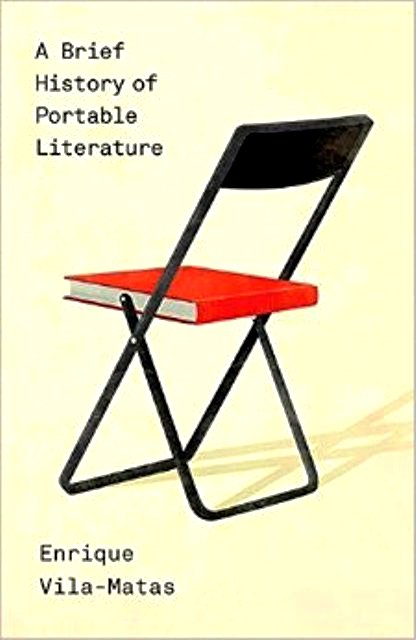
A Brief History
of Portable Literature
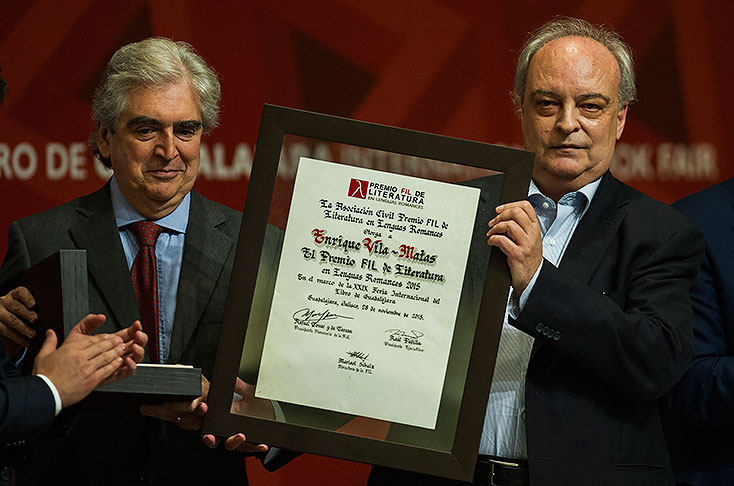
Rulfo Award.
Guadalajara 2015 (México) |
- A fictional history unfolds. Alex McCown. A.V.Club. June 8, 2015.
- A Brief History of Portable Literature. M.A.Orthofer. Complete Review. June 8, 2015.
- The Funniest Secret Society in (Portable) Literary History. Jonathon Sturgeon. Flavorwire. June 11, 2015.
- The Shandy secret society. Hal Hlavinka. Quaterly Conversation. June 15, 2015.
- To find new ways to alchemize negativity. Danny Byrne. Music & Literature. June 23, 2015.
- A stimulating read. Tony Bailie. New York Journal of books. June 8, 2015.
- Tyler Curtis reviews A Brief History of Portable Literature. Tyler Curtis. Asymptote. July 15, 2015.
- In transit. Scott Esposito. Times Literary Supplement. August 14, 2015.
- A Brief Trace of a Shandy: The Life & Literature of EV-M. Luis Fernando Alcántar. Entropy. March 2016.
|
|

Interview with Valerie Miles, translator on Spanish of
Because she never asked.
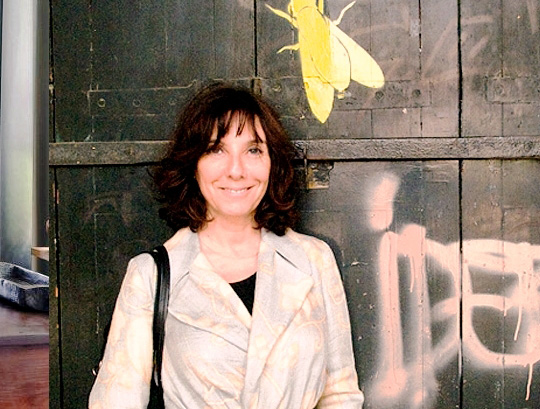
Sophie Calle |
- Spain’s literary mischief-maker in chief. Tobias Grey. The Wall Street Journal. Aug. 6, 2015.
- Because She Never Asked. M.A.Orthofer. Complete Review. November 24, 2015.
- Because She Never Asked. Julia Jenkins. Shelf Awareness. November 24, 2015.
- Because she never asked, in the best of 2016 ARTFORUM.
- 8 Novels and Stories Inspired by Real Works of Art. Tobias Carroll. Signature, December 13, 2016.
|
|
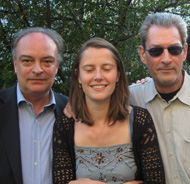
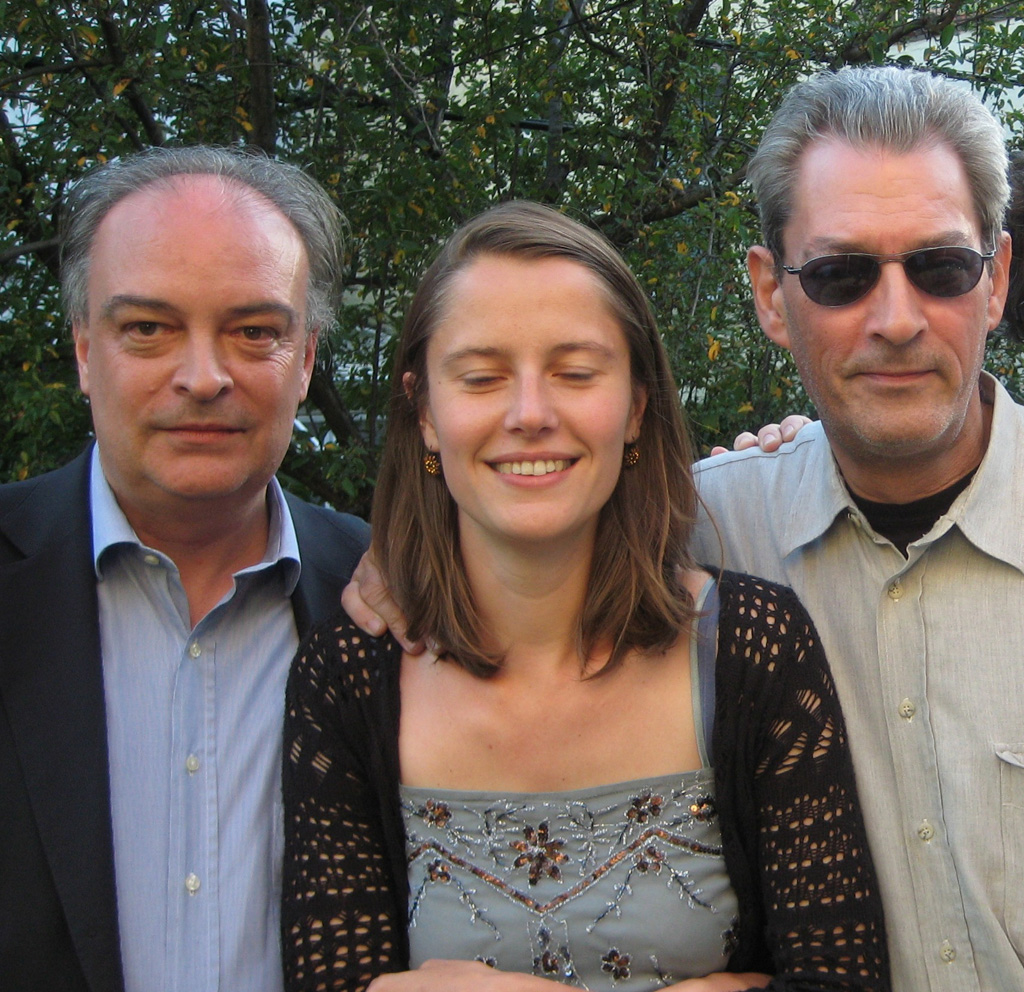
With Celine Curiol at Paul Auster
home in New York |
- Cynical, funny, and often puzzling. Kirkus Reviews. July 9, 2016.
- Alexander, Jan. Summon all Six Senses. Neworld Review. No 67. New York. August 18, 2016.
- Haber, Mark. It's a welcome delight. The Rumpus. September 1st, 2016.
- Malone, Taylor, Vampire in Love in Lithub. Lithub. September 1st, 2016.
- Ciabattari, Jane. Ten Books for September. BBC CULTURE. September 1st, 2016.
- Vampire transladed. Two Lines Press. September 6, 2016.
- Compass, Rose. Brilliant short story collection. Compass Points. September 9, 2016.
- Haber, Mark. Interview with Vila-Matas. Brazosbookstore. September 23, 2016.
- Anonymus. Incredibly amusing. Publishers Weekly. September 27, 2016.
- Munger, Kel. Firm believer in the power of narrative. Litrant. October 18, 2016.
- Adams, Matthew. Monstrous humans and human monsters. The National. October 20, 2016.
- Rintoul, Grant. Fantastic introduction to his work. 1streading's Blog. October 29, 2016.
- Gopal, Kevin. Interview with autor Vampire in Love. Bigg Issue North. 30 Oct. - 6 Nov. 2016.
- Haslam, Delaina. Margaret Jull Costa about Translating Short Stories Vila-Matas. Glasgow Review of Books. November 3, 2016.
- O'Hanlon, Galen. Vampire in Love. The Skinny. November 3, 2016.
- Briefly Noted. The New Yorker. November 21, 2016.
- Kavenna, Joanna. Exquisite Truths. Literature Review. London, December 7, 2016.
- Nathan West, Adrian. No more emails. TLS. Times Literary Supplement. February 1, 2017.
- Mitchelmore, Stephen. Death by Saudade. This Space. February 19, 2017.
- Golovchenko, Margaryta. Charm that cannot be compared to anything else. The Coil. Toronto. March 28, 2017,
|
|
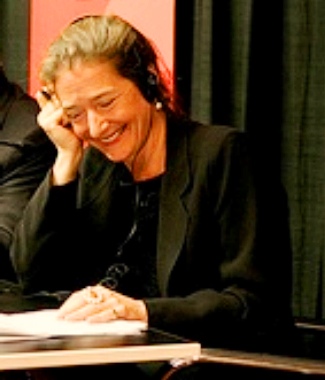
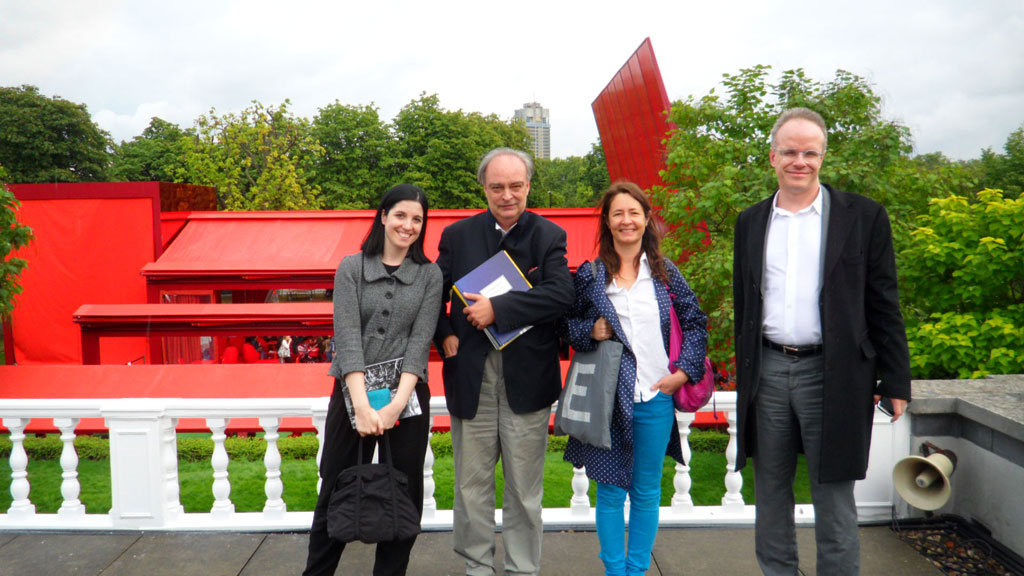
A Short Conversation with
Barbara Epler (New Directions)
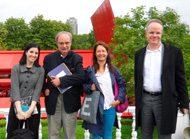
Txell, V-M, Dominique González-
Foerster and Hans Ulrich Olbrist,
London, Serpentine G.
August 2010.
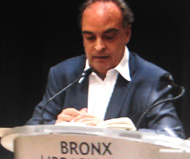
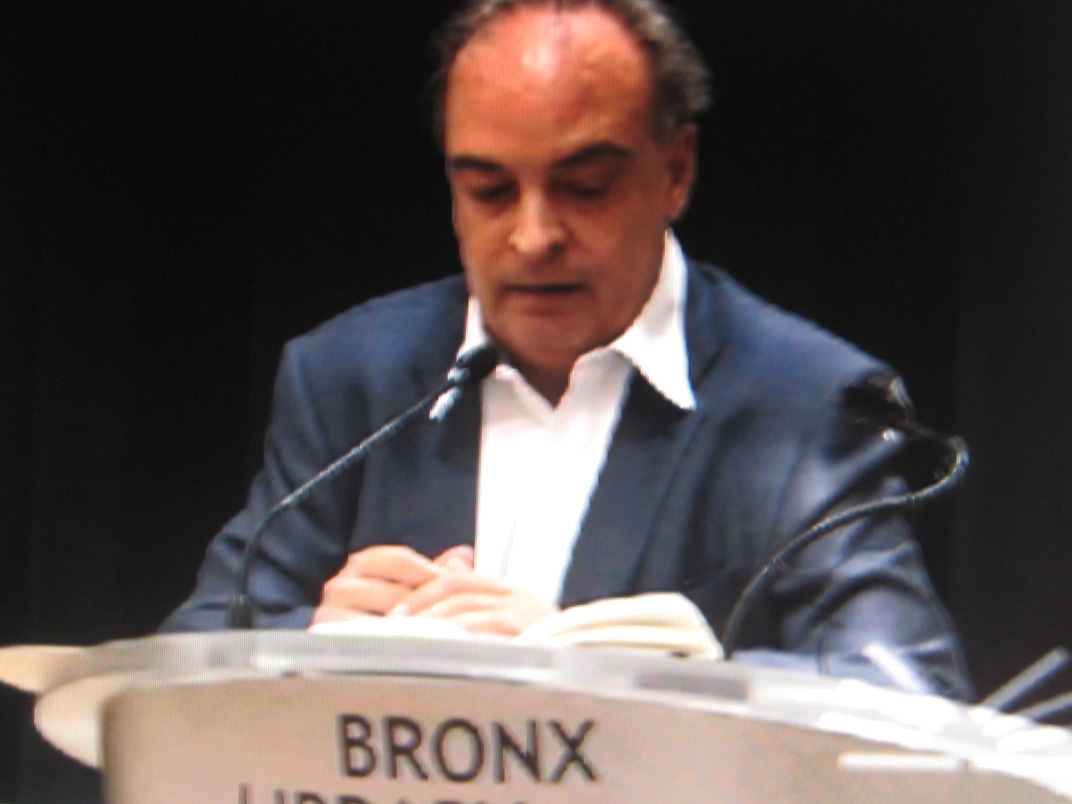
At the Bronx Library Center |
- Becoming Brendan (A masterpiece). Jacqueline McCarrick. The Times Literary Supplement. (27 July 2012, n. 5704)
- Dublinesque is an elegy of sorts. M.A. Orthofer. The Complete Review. May 26, 2012
- Dublinesque by E V-M. David Winters. Ready Steady Book. 11/06/2012
- Dublinesque. Alberto Manguel. The Guardian. 16/06/2012
- After Bloomsday comes… Ribasday. Eileen Battersby. Irish Time. 16/06/2012
- Dublinesque by V-M. John Self. The Independent. 16/06/2012
- John Latta Reading Notes. John Latta. Blog Isola di Rifiuti. June 2012
- The ‘not-so-serious unreadable’ Ulysses. Sanjay Sipahimalani. The Sunday Guardian. New Dehli, June 30, 2012
- Dublinesque. Violet. Still Life With Books. July 2012
- Review of Dublinesque (New Directions). The Coffin Factory. New York. July 201.
- Irishness is for other people. Terry Eagleton. London Review Books (Vol 34. No 14. Pages 27-28). July 19, 2012
- Always Someone Turns Up. Tyler Malone. The Millions. July 25, 2012
- Big time intertextualy. Tony´s reading blog. July 19, 2012
- Tam Tam for Dublinesque. The wonderful Word of Tam Tam Books. August 5, 2012
- Things fall apart. Joanna Kavenna. The New Yorker. September 2012
- Bloomsday, like Doomsday. Ryan Healey. Los Angeles Review of the books. 31.08.2012
- Written Off. By Rachel Nolan. New York Times 01.09. 2012 [PDF]
- A Provisional Miracle: Dublinesque by Enrique Vila-Matas. Stephen Mitchelmore. This Space. Friday, June 01, 2012
- Vila Matas' New York Connection. José Manuel Simián. Daily News. 11 oct. 2012
- Dublinesque by V-M. Will. H. Corral. World Literature Today. Nov. 2012
- Addled by Books. Morten Høi Jensen. Dublin Review of Books. Nov. 2012
- Found in translation: 2012’s best fiction. Sanjay Sipahimalani. The Sunday Guardian (India). 29 dec. 2012
- Dublinesque. Mel u. The Reading Life. December 30, 2012
- The Novel of Micro-Events. Terry Pitts. Vértigo. January 2, 2013
- Critical note in Three Percent: Why This Book Should Win: Dublinesque. April 2013
|
|
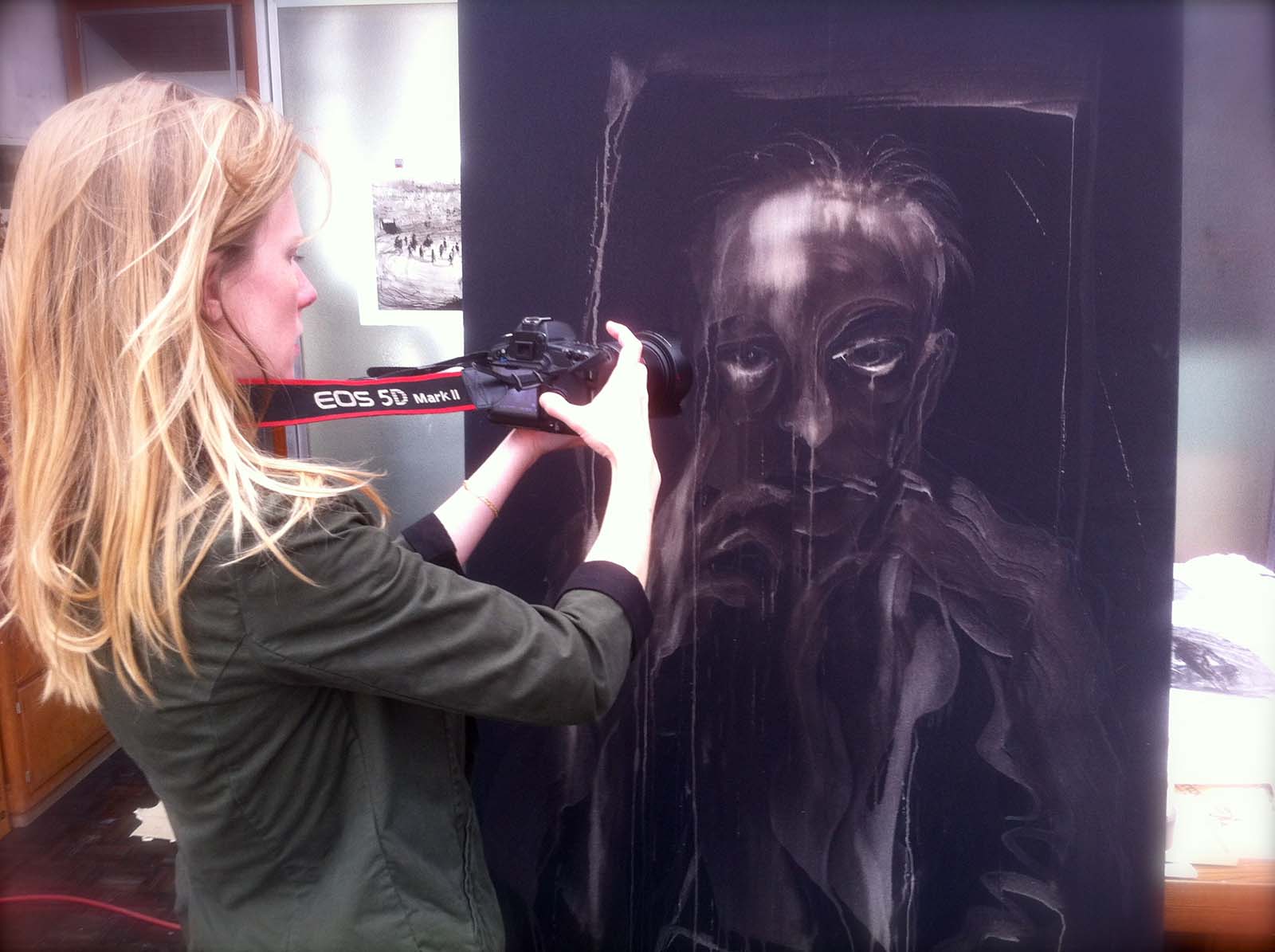
Vila-Matas, by Miquel Barceló
(Paris 2015)
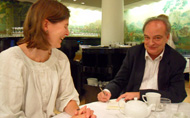
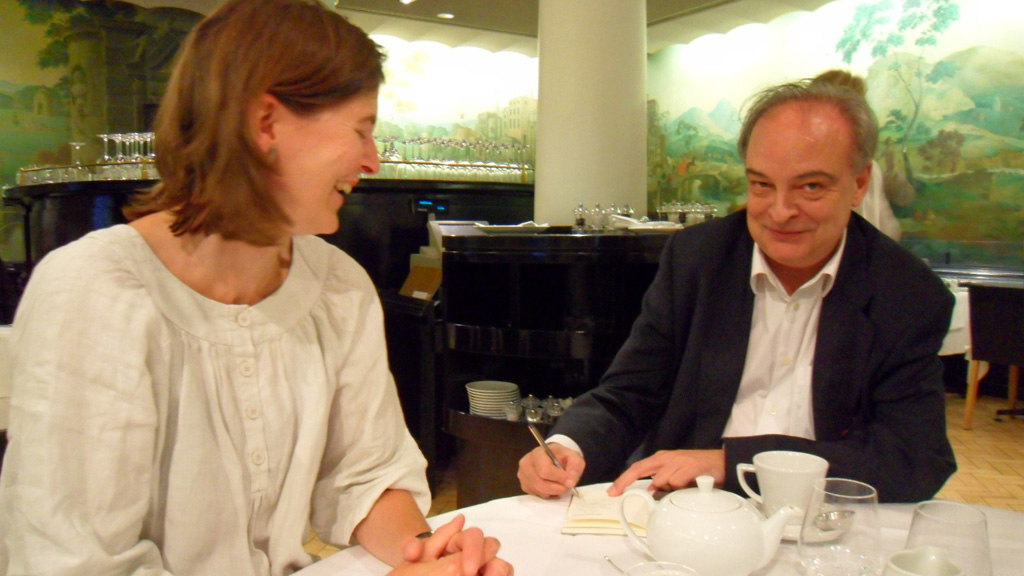
With Rebecca Carter (Harvill Secker / Random House), London, August 2010
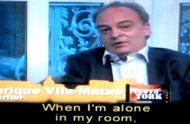
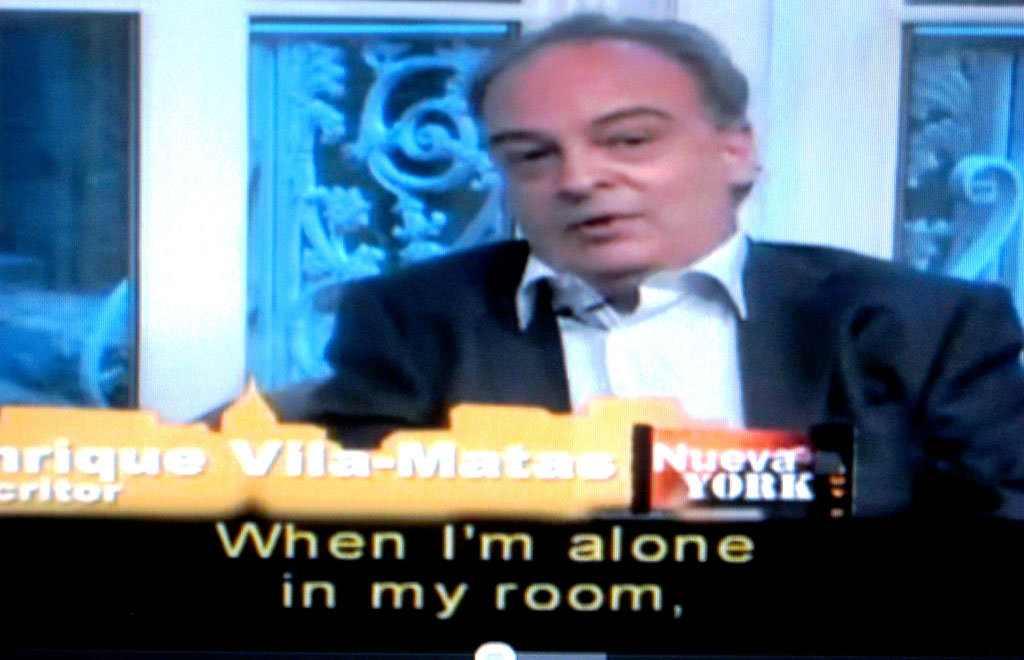
In my room (TV)
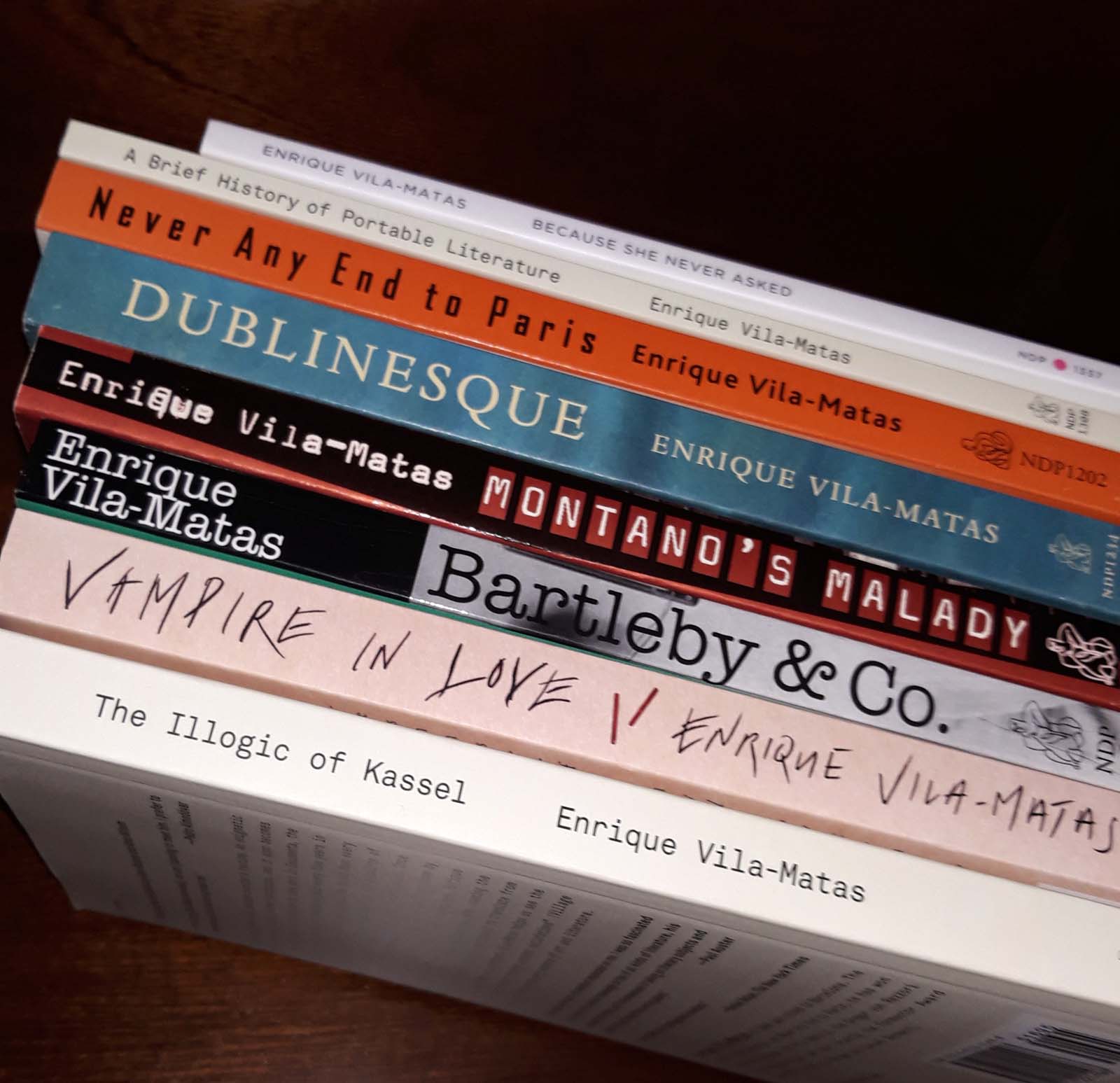
|
- Spain’s literary mischief-maker in chief. Tobias Grey. The Wall Street Journal. Aug. 6, 2015.
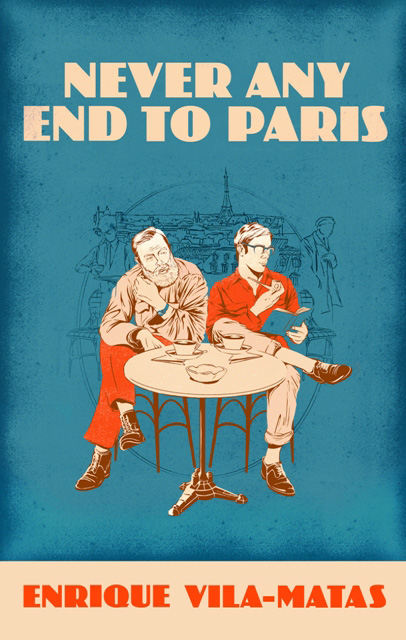
- Enrique Vila-Matas on ‘Never Any End to Paris’, by Scott Esposito. The Paris Review. June 6, 2011
- The Year of Reading Dangerously. 1streading's Blog. August 2011
- About Vila-Matas & Juan Gabriel Vasquez. Arts Fuse. The Culture of New England, by Bill Marx. June 2011
- Enrique Vila-Matas’s “Never Any End to Paris”, by Anderson Tepper. Words without Borders. June 2011
- Never Any End to Paris, a fictional memoir by Enrique Vila-Matas, by Ron Slate. On the Seawall. June 2011
- Never Any End to Paris by E. Vila-Matas, Translated by Anne McLean, Salonica Summer's Reads. June 2011
- Never Any End to Paris by Enrique Vila-Matas, by Jeremy Garber. Three Percent. May 2011
- I have become increasingly enamored with Enrique Vila-Matas..., from New Directions blog. May 2011
- Never any End to Paris, by Jesse Tangen-Mills. Bookslut. September 2011
- Never any End to Paris in Bomblog. September 2011
- Paying for the Lights of Bohemia, by David Winters. 3: AM Magazine. September 2011
- Never Any End to Paris, by Lawrence Olszewski. Library Journal. July 2011
- A wonderful fine for me. Julia Here. Booksoup. 8818 Sunset Blvd. Hollywood. September 2011
- Enrique Vila-Matas is the new literary phenomenon. The Culture Trip. 23.11.2011
- NEVER ANY END TO PARIS by enrique vila-matas. Eugene Lim. Blog www.eugenelim.com. July 2012
- A bow to Semadar Megged. Blog WRITING ANYWAY (A reading & writing journal). 13 November 2012
- Never any end to Paris. Winstonsdad. Winstondad's Blog. 5.06.2014.
- Never Any End To Paris. Eric Mayrhofer. Curious Animal. 17.06.2014.
- This wonderful book. Jonathan Gibbs. The independent. 2 July 2014.
- In the shadow of Heminghway. Val Nolan. Irish examiner. 2 July 2014.
- A lecture, or a novel? Natasha Lehrer. The Times Literary Supplement, july 2014.
- Never Any End to Paris by V-M. Patricia Duffaud. The Bookbag, july 2014.
- Never any.... Jacqui Wine. JacquiWine´s Journal. July 2014.
- Beckman, Jonathan. Dura´s Lodger. Literary Review. 01 August 2014.
- Christofi, Alex. Top 10 books on postwar France. The Guardian. 30 August 2017.
|
|
|
| |
|
PHOTO GALLERY |
|
|
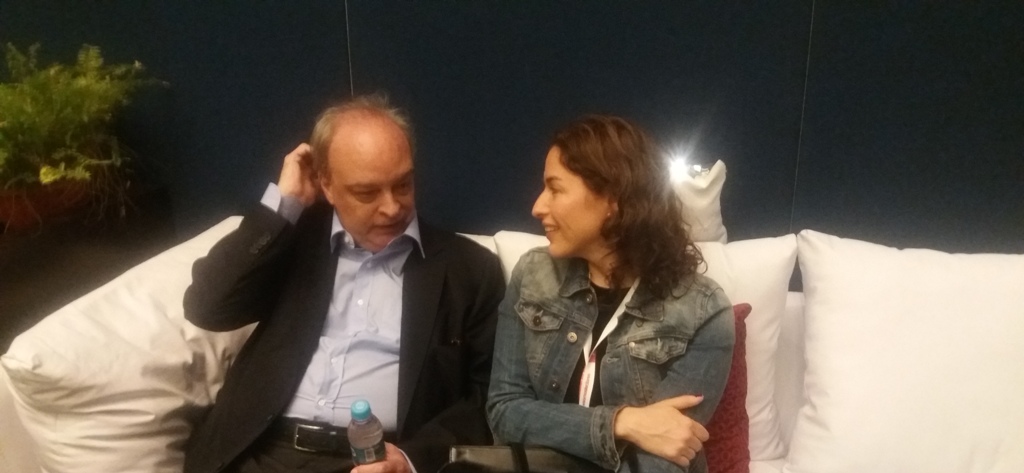
Vila-Matas and Guadalupe Nettel, México 2015
|

New York, 2008
|
|

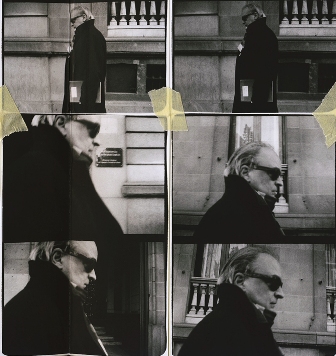
Enrique Vila-Matas Takes a Walk
Strolling in Midtown Manhattan = Act of Resistance
|
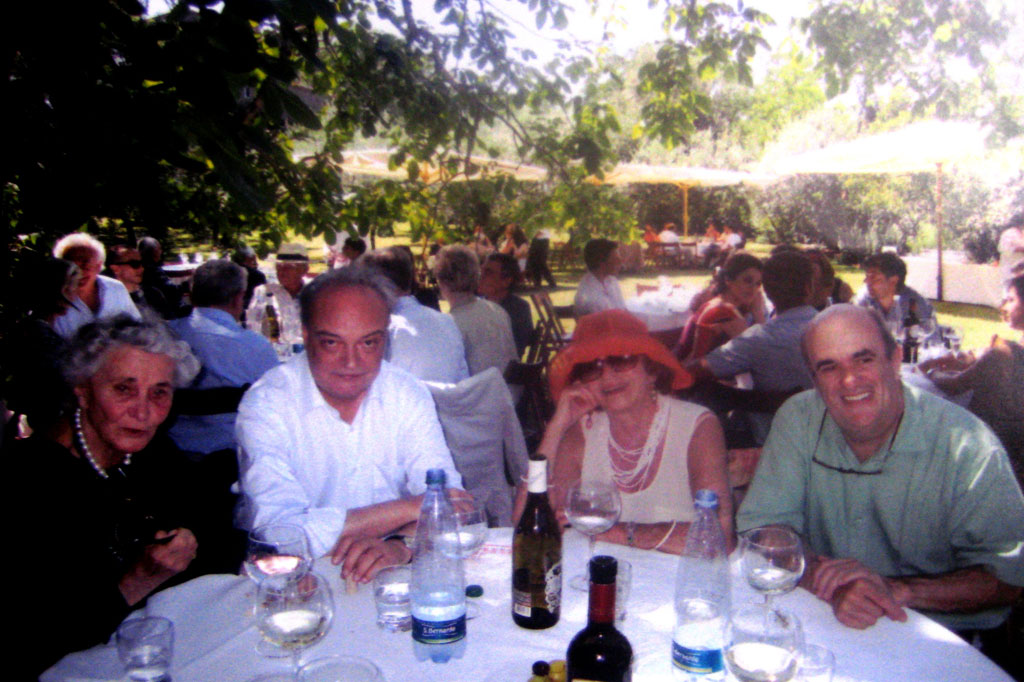
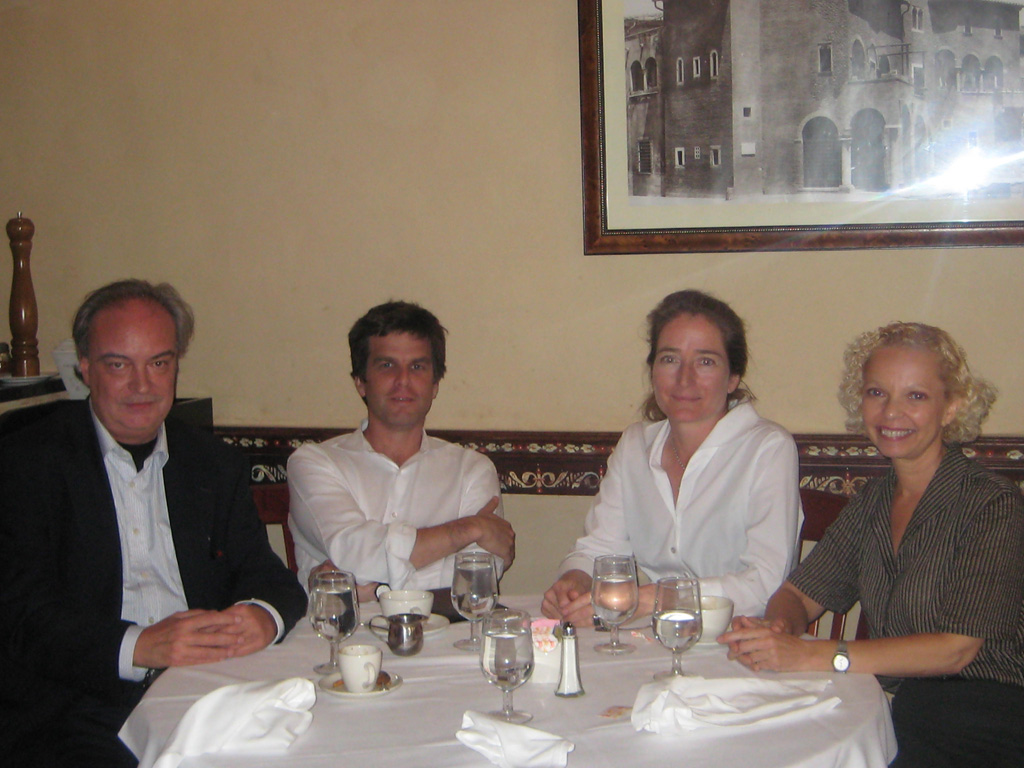
With Baroness Von Rezzori,
Inge Feltrinelli and Colm Toibin
|
|
|
| TWO TEXTS |
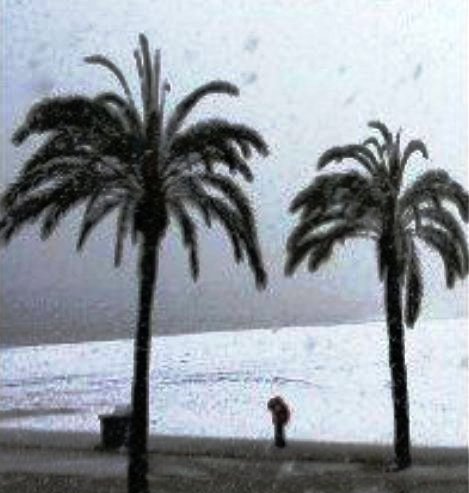
THE PATIO OF MY PARENTS
That morning the patio of my parents’ home appeared covered in snow and I couldn’t believe it. To start with, I thought it was part of my mother’s Christmas decorations. I remember that December 25th very well. Me with a scarf inside the house, listening to my mother say that for a city like Barcelona, so abandoned by the hand of God, it was a blessing that, even if it was only the once, He should have remembered us and brought us snow on the most appropriate day, Christmas Day, with divine punctuality.
For me, Christmas Day will always be the day of the Great Snowfall. Wrapped in two jerseys and a scarf inside the house, I switched on the radio and suddenly we heard a message of peace and Christmas goodwill from Salvador Dalí, a few emotional words from the Ampurdán painter telling us that, from that day on, he planned to orient all his life toward Franco’s Spain and the family: “Isabella the Catholic, consecrated hosts, melons, rosaries, truculent indigestion, bullfights, Calanda drums and Ampurdán sardines. To sum up: my life must be oriented toward Spain and the family.”
We listened to that message in respectful silence mixed with some astonishment. The snow fell stealthily on the patio outside, as at the beginning of a Christmas tale.
“Dalí’s turned into one of us,” said my father.
(Enrique Vila-Matas (2007), translation of Jonathan Dunne. Montano's malady. New York: New Directions) |
|
|
EAST END
Bel has rented the only David Cronenberg film I haven't seen. It's about "the breakdown of communication between a loner and an inhospitable world." In the first scene, young Spider, the protagonist, is the last to get off a train, and we can see immediately that he's different from the other passengers. Something seems to have clouded his mind, he stumbles as he steps down with his small, odd suitcase. He's attractive, but it's clear he's mentally disturbed, a solitary man completely disconnected from an indifferent world. Bel asks me if I've noticed that despite the fact it's summertime Spider is wearing four shirts. Actually, no, I hadn't. I apologize and explain that I haven't had time to focus on the movie yet. Besides, I don't pay attention to those kinds of details. But it's true. He's wearing four shirts in high summer. And what about his suitcase? It's tiny and old and when Spider opens it we see it contains useless objects and a small notebook where he makes illegible notes in miniscule print.
Bel asks me about Spider's writing, and then she asks if I've noticed there's no one on the gloomy streets of the East End neighborhood that Spider's wandering around. In fact, Bel hasn't stopped asking me questions since the movie started.
"Has someone asked you to confirm that I can still communicate with the world at large?" I ask her.
Bel doesn't answer. Spider appears to be listening to, even eavesdropping on our conversation, even my thoughts. Am I Spider? I watch as he looks at the camera, shuts his suitcase, and walks through the cold, deserted streets. He acts as though he's entered our living room. He moves as though one of London's dicier neighborhoods is right outside. Spider is en route from a mental institution to a theoretically gentler place, a halfway house or psychiatric institute, coincidentally located in the same London neighborhood where he spent his childhood, and this will spur him to a fatal reconstruction of those early years. While Spider revisits years gone by, the scenes and memories that he reconstructs with supposed (only supposed) bases in fact, I wonder whether one's tangled mental life ever escapes the neighborhood of childhood.
"The insane are so strange," says Bel. "But interesting, don't you think?"
It strikes me again that she's trying to see how I react to Spider, and thereby measure my own degree of dementia. The film is a mental journey, a deranged man's travels through the East End. We see life as Spider experiences it, through the filter of the miserable mental framework of this young man with the strange suitcase and little notebook of microscopic handwriting.
"Have you seen what he's writing in the notebook?" Bel asks next.
If I were home alone watching Spider, I would put on Bob Dylan, maybe "Most Likely You Go Your Way," a song that always stimulates me.
"I've only seen the notebook," I answer. |
|
Bel freezes the frame to try to make out what Spider is writing in said notebook. They're runes, sticks or toothpicks, bent, or so unfinished that they don't even look like scratches, and naturally they don't belong to any alphabet or hieroglyphics. They're scary. No matter how you look at them, these scratchings compose a perfect portrait of the absurdity of madness which terrifies me. Perhaps there's something of Spider in all of us. Sometimes I identify with Spider, who in turn reminds me of Il deserto rosso, the 1964 Antonioni film in which Monica Vitti plays a wanderer, a feminine version of Spider avant la lettre, a woman lost in a hermetic industrial landscape, unable to connect with her surroundings.
From what I've seen, in Spider the frame of mind makes subtle reference—especially through Peter Suschitzky's cinematography—to the style of Il deserto rosso. And just as in that film, it seems that every futile attempt to connect with the outside world indicates the inability to define a personal identity. Am I Spider? In the most memorable scene of the movie Spider weaves a tangle of strings in his room, a mental spiderweb that illustrates the terrifying workings of his mind. Regardless, these difficult attempts to recreate his identity prove useless. He walks the inhospitable streets of the East End, the cold, old paths of his lost childhood: he's lost any connection to the world and has no idea who he is.
Am I Spider? The anguish I feel casts me adrift in the dangerous territory of childhood memories, a place where I could lose myself forever. But at the last moment I escape, saved by Monica Vitti's line in Il deserto rosso, a line almost as dangerous as my own East End.
"My hair hurts."
I could say the same right now. Spider will. Spider, who wanders lost through life, doesn't know he could do what I have, and reconstruct his identity using other people's memories, he could become a unique voice, representative of a character with multiple personalities and nomadic tendencies. Am I Spider? I know only that stinking summer has arrived and, as she always does this time of year, Bel is acting like she thinks everything I do—what I say and what I eat and what I think and what I watch and what I drink, everything—I do to lose myself in the periphery of that dangerous place. |
http://wordswithoutborders.org/article/east-end
Translation of "East End." Copyright Enrique Vila-Matas. By arrangement with the author.
Translation copyright 2009 by Samantha Schnee. All rights reserved. |
|
|
|
|
| [Contact for translations: txell@mbagencialiteraria.es] |
|
|
| enriquevilamatas.com |
|